The Companies That Will Win the Next Decade Won’t Be the Ones That Adapt Faster — But the Ones That Think Differently
Every executive today is navigating pressure.
Artificial intelligence is accelerating faster than governance. Teams are increasingly diverse across generations, expectations, and values. Decision cycles are shrinking while risks are expanding. Markets demand innovation, but organizations are often structured for stability.
Most leadership teams are doing something understandable:
They are managing complexity.
But very few are doing something far more powerful.
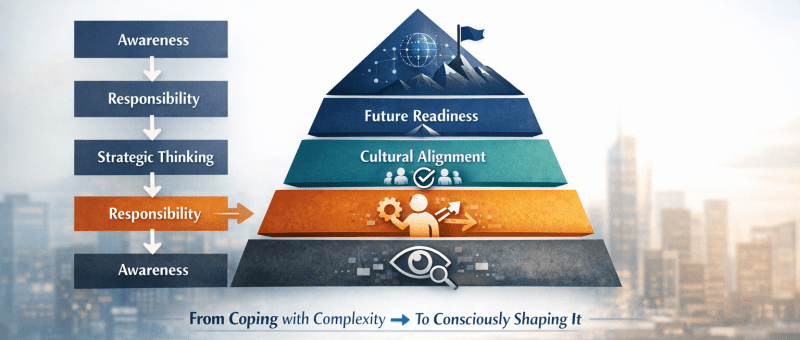
They are architecting clarity.
And this difference will define which organizations thrive in the next decade.
The Hidden Problem Inside Many Leadership Teams
When organizations struggle, the issue is rarely a lack of intelligence or effort.
The real issue is how leaders are thinking and responding under pressure.
Under constant complexity, leadership teams often fall into invisible coping patterns:
• Decisions are delayed because uncertainty feels risky • Conflict is avoided in order to maintain harmony • Leaders control more instead of enabling others • Strategy becomes reactive rather than intentional • Cultural change initiatives stay at surface level
These behaviors are human.
But over time they quietly erode:
Strategic clarity
Decision speed
Innovation capacity
Leadership credibility
Organizational trust
What organizations need today is not another leadership seminar.
They need a deeper transformation in how leadership operates.
What True Management Consulting Should Actually Do
Traditional consulting often focuses on solving specific problems.
But the most valuable consulting does something more fundamental:
It elevates the quality of thinking that creates those problems in the first place.
At its highest level, management consulting becomes a partnership that strengthens:
Without awareness, those triggers create defensive patterns:
Control Avoidance Blame Over-analysis Decision paralysis
But when leaders develop the discipline to observe those reactions, something changes.
They gain the freedom to choose a different response.
And that shift transforms the entire organization.
Leadership Transformation Is Not About Learning More
Most executives already know what good leadership looks like.
The challenge is not knowledge.
The challenge is behavior under pressure.
True transformation happens when leadership teams strengthen:
• Emotional regulation under complexity • Strategic thinking beyond short-term urgency • Courageous conversations that surface real issues • Decision-making free from cognitive bias • Cultural alignment between intention and behavior
When these capabilities evolve together, organizations experience something powerful:
Strategic coherence.
And coherence multiplies performance.
Where Artificial Intelligence Fits Into the Future of Leadership
AI is already reshaping industries.
But the real risk organizations face is not technological.
It is leadership readiness.
Without strong governance, AI adoption creates confusion, fear, and ethical exposure.
But when leaders understand AI strategically, it becomes something else entirely:
Technology alone does not create competitive advantage.
Leadership clarity does.
The Results Organizations Experience
When leadership transformation is done deeply and structurally, organizations begin to experience measurable change.
Executives report:
• Faster and more confident decision cycles • Stronger alignment across leadership teams • Reduced resistance to organizational change • Higher engagement and psychological safety in teams • A stronger innovation pipeline • Responsible and confident AI integration • Increased leadership credibility and trust
Over time, something even more valuable emerges:
a culture that can navigate uncertainty without losing direction.
The Leadership Question That Matters Now
The future will not reward organizations that simply react faster.
It will reward organizations whose leaders can see more clearly, think more deeply, and act more intentionally.
The question every leadership team must ask is not:
“How do we manage all this change?”
The real question is:
“How do we become the kind of leaders who can shape it?”
Because the organizations that win the next decade will not be those that survive complexity.
They will be the ones that design clarity inside it.
And that transformation always begins with responsibility.
Contemporary Leadership and the Hubris of Oedipus: A Cautionary AnalogyI
In the realm of contemporary leadership, the timeless lessons from classic literature often resonate with modern dynamics. The story of Oedipus, with its tragic exploration of hubris, offers a powerful analogy for understanding the potential pitfalls that can beset today’s leaders. Oedipus’s journey, marked by excessive pride and a fatal disregard for divine warnings, serves as a cautionary tale for those in positions of power today.
Oedipus, a central figure in Greek mythology and the tragic hero of Sophocles’ play “Oedipus Rex,” is renowned for his dramatic and complex life story. Born to King Laius and Queen Jocasta of Thebes, Oedipus was prophesied to kill his father and marry his mother. To avoid this fate, his parents abandoned him, but he was rescued and raised by the royal family of Corinth. Unaware of his true origins, Oedipus eventually fulfills the prophecy through a series of unintended actions, leading to his downfall. His tale is a poignant exploration of fate, identity, and the limits of human understanding.
In my executive coaching sessions with clients, I often encounter challenges rooted in the same type of hubris that led to Oedipus’s downfall. The story of Oedipus, with its poignant exploration of excessive pride and its consequences, provides a powerful framework for understanding and addressing these challenges in modern leadership.
The Hubris of Modern Leaders in Coaching Context
Overconfidence in Decision-Making: Like Oedipus, who was overly confident in his ability to solve Thebes’s problems, many leaders today exhibit overconfidence in their decision-making processes. This can manifest as a reluctance to seek input from others or to consider alternative viewpoints. In coaching, I help clients recognize the value of collaborative decision-making and the importance of integrating diverse perspectives to enhance the quality of their strategies.
Disregard for External Advice: Oedipus’s dismissal of the oracle and Tirésias’s warnings mirrors the behavior of leaders who ignore expert advice, convinced of their superior insight. In my sessions, I emphasize the importance of humility and the willingness to listen to advisors, stakeholders, and market data. This approach helps leaders avoid strategic missteps and ensures that their decisions are well-informed.
Perceived Invulnerability: The belief in one’s invulnerability, as seen in Oedipus’s attempt to outmaneuver fate, is a common issue among executives. This can lead to complacency and an underestimation of risks. Through coaching, I work with leaders to develop a realistic understanding of their vulnerabilities and to foster a mindset of continuous improvement and adaptability.
Conflict and Accusation: Oedipus’s tendency to deflect blame onto others when confronted with unpleasant truths is a behavior I often see in the leaders I coach. This creates a toxic culture of fear and mistrust. In our sessions, I focus on building emotional intelligence and accountability, helping leaders to own their mistakes and learn from them, thereby strengthening trust within their teams.
Addressing Hubris through Executive Coaching
Encouraging Open Dialogue: I coach leaders to create environments where open dialogue is encouraged and diverse opinions are valued. This helps prevent the echo chamber effect and leads to more balanced and innovative decision-making. Leaders learn to appreciate the input of their teams and to recognize that good ideas can come from any level of the organization.
Continuous Learning: Emphasizing the importance of lifelong learning, I encourage leaders to stay curious and informed about industry trends and to remain open to new ideas and feedback. This mindset helps them adapt to changing circumstances and maintain a competitive edge.
Balanced Ego: Confidence is essential, but it must be tempered with humility. In coaching, I help leaders understand the importance of acknowledging their limitations and valuing the contributions of others. This balanced approach not only enhances their effectiveness but also fosters a positive organizational culture.
The lessons from Oedipus’s hubris are strikingly relevant to contemporary leadership. Through executive coaching, I guide leaders in recognizing and overcoming their own hubris, fostering humility, self-awareness, and a collaborative mindset. By learning from the tragic flaws of Oedipus, today’s leaders can navigate their roles more effectively, achieving sustainable success and building strong, innovative teams. This ancient story thus becomes a valuable tool in modern executive coaching, providing timeless insights into the dynamics of power, pride, and leadership.
As an executive coach with two decades of experience in the multicultural European market, I’ve had the privilege of guiding leaders through the ever-changing landscapes of leadership, communication, and performance improvement. Throughout my career, I’ve encountered a common thread that often weaves itself into the fabric of corporate decision-making—the intricate interplay of heuristics and biases.
In the fast-paced and competitive world of business, effective leadership and decision-making are paramount. Yet, the human mind, including mine, isn’t immune to the subtle influences of mental shortcuts known as heuristics. These shortcuts, designed to help us make quick decisions in a complex world, can sometimes lead us astray when it comes to the nuanced intricacies of corporate leadership.
Understanding Heuristics and Biases: To appreciate the transformative power of coaching, we must first understand the concepts of heuristics and cognitive biases. Heuristics are mental shortcuts that our brains use to make decisions quickly, often relying on past experiences and patterns. However, these shortcuts can introduce cognitive biases—systematic errors in thinking that can affect leadership and communication effectiveness. Examples include confirmation bias, where we seek information that confirms our preexisting beliefs, and the anchoring effect, where we attach too much importance to initial information.
Consider this scenario: A leader, guided by confirmation bias, consistently surrounds themselves with like-minded team members, stifling diverse perspectives and innovation. Such biases can be detrimental to leadership.
Picture this: Meet Sara, a seasoned executive who’s known for her go-getter attitude and confidence. She’s in charge of a growing tech company, and they’re about to make a pivotal decision – a major product launch. Sara has this incredible idea for a game-changing product, and she’s convinced it’s the key to their future success. So, she assembles her team for a meeting. Now, here’s where things get interesting. She got a bit of a cognitive bias brewing – it’s the “anchoring effect.” She’s so enthusiastic about her idea that she sets an initial price tag for the product that’s way higher than anything the market has seen before. She believes that this high price will not only showcase the product’s value but also boost profits. As the team discusses this, they start to have doubts. Some members express concerns that the high price could alienate their existing customer base, while others worry about potential backlash on social media. Despite the doubts, Sara is firmly anchored to her initial price point; it’s become her benchmark.
This scenario is a classic example of how the anchoring bias can play out. Sara’s reliance on that initial number, her anchor, blinds her to other perspectives and possibilities. She’s become so attached to it that she’s missing out on valuable input from her team, and she’s risking the success of the product launch.
Now, imagine if Sara had access to coaching. A skilled coach could help her recognize this bias, challenge her initial anchor, and guide her toward a more flexible and data-driven decision-making process. With coaching, She could avoid potential pitfalls and make more effective choices for her company’s future. In this way, executive coaching isn’t just about personal development; it’s a game-changer for leadership and decision-making in the business world.
“Availability heuristic”
Let’s meet Mike, a middle manager in a bustling corporate office. Mike’s known for his quick thinking and ability to make snap decisions, which has helped him climb the corporate ladder. But there’s a catch – he’s also prone to what psychologists call the “availability heuristic.”
One day, the company faces a significant challenge: a sudden drop in sales figures. Panic ensues, and everyone’s brainstorming solutions. In the midst of the chaos, Mike remembers a recent news article about a competitor’s successful marketing campaign. Without much thought, he suggests, “Let’s do exactly what they did!”. Here’s where the availability heuristic comes into play. Mike’s decision is heavily influenced by the readily available information in his mind – that one news article. He’s overlooking critical factors like his own company’s unique customer base, product offerings, and market positioning. Instead, he’s blindly following the success story he read about, assuming it’s a one-size-fits-all solution. His team, however, is skeptical. They question whether the competitor’s strategy is truly relevant to their situation. But Mike remains steadfast in his decision, convinced that he’s found the silver bullet to boost sales. In this scenario, Mike’s reliance on the availability heuristic is steering him in a potentially risky direction. He’s neglecting to consider the broader context and nuances of his own company’s challenges. Now, imagine if Mike had been working with an executive coach. A skilled coach could help him recognize his tendency to rely on readily available information, encourage him to gather more data, and guide him in making a well-informed decision tailored to his company’s specific needs. Through coaching, Mike could develop a more balanced approach to decision-making, one that incorporates both quick thinking and a deeper understanding of the situation. This kind of growth not only benefits Mike as an individual but also has a positive ripple effect on his team and the entire organization.
So, remember, coaching isn’t just about “fixing” someone; it’s about honing the skills and strategies that lead to more effective leadership and decision-making.
Heuristics and Biases in the Corporate Arena: In the corporate world, heuristics and biases are more common than you might think. Imagine a scenario where a company is experiencing a downturn in sales. The CEO, desperate to find a solution, recalls a recent success story from a competitor and decides to emulate their strategy. This decision is influenced by the availability heuristic—the tendency to rely on readily available information rather than conducting a thorough analysis of the company’s unique situation.
The High Cost of Cognitive Biases: The consequences of cognitive biases can be severe. In our example, the CEO’s decision may not align with the company’s market position, customer base, or overall strategy, leading to wasted resources and missed opportunities. Such decisions can negatively impact not only the company’s bottom line but also employee morale and long-term growth prospects.
The Role of Executive Coaching: This is where coaching comes into play. A skilled coach acts as a guide, helping leaders recognize and reshape their heuristics and biases. Just as an athlete needs a coach to reach peak performance, executives can benefit immensely from a coach’s expertise in decision-making, communication, and leadership.
Real-Life Success Stories: Let’s consider two real-life examples. In Company A, the CEO, prone to confirmation bias, was resistant to dissenting opinions from the leadership team. After engaging in coaching, they learned to value diverse perspectives, resulting in more innovative strategies and better decision outcomes.
In Company B, a middle manager frequently relied on the anchoring bias when setting project timelines, causing frustration among team members. Through coaching, this manager improved their ability to set realistic expectations, leading to smoother project execution and improved team morale.
Measuring the ROI of Executive Coaching: coaching isn’t just an investment in personal development; it’s an investment in a company’s success. Research has shown that organizations that provide coaching to their leaders experience significant returns on investment (ROI). This ROI can manifest in various ways, such as increased employee engagement, improved decision-making, enhanced leadership skills, and ultimately, a healthier bottom line.
Executive coaching is a personalized and transformative process that involves working one-on-one with a skilled coach to unlock an individual’s potential. It is an essential tool in the journey toward better leadership and communication. Coaches provide guidance, feedback, and a safe space for self-reflection.
In the context of leadership development and communication skills, executive coaching serves as a compass, helping clients navigate the complexities of their cognitive biases and heuristics. Through thoughtful guidance and support, coaches empower individuals to recognize and reshape these patterns.
Strategies for Shaping Heuristics and Biases: Effective coaching employs an array of strategies and techniques to help clients identify and reshape their heuristics and biases. Some of these include:
Self-awareness exercises: Coaches may encourage clients to reflect on their decision-making processes and identify recurring patterns.
Behavioral experiments: Clients might test alternative approaches to decision-making and communication to challenge their biases.
Feedback loops: Regular feedback and self-assessment tools can help clients track their progress and adjust their strategies.
Let’s take a closer look at an example of how these strategies work in practice.
Leadership Development Through Heuristic Shaping: Imagine a leader who consistently falls victim to the anchoring bias during negotiation. They set an initial price that anchors subsequent discussions, often to their detriment. Through coaching, they gain insights into this pattern and engage in behavioral experiments to detach from their initial anchor. Over time, they become a more flexible and effective negotiator, leading to better outcomes for their organization.
Effective Communication Enhancement: The same principles that apply to leadership development extend to communication. Coaches help clients identify biases that may hinder their communication effectiveness. For instance, by addressing confirmation bias, a leader can become more open to diverse viewpoints, fostering better team collaboration and communication.
Measuring Progress and Accountability: A fundamental aspect of coaching is setting measurable goals and benchmarks. Coaches track progress, holding clients accountable for their development. Assessment tools and metrics help gauge improvements, ensuring that the coaching process remains focused and results-driven.
In the fast-paced world of business, heuristics and biases are ever-present challenges that can hinder effective leadership and decision-making. However, executive coaching serves as a powerful antidote. By guiding leaders to recognize and reshape their mental shortcuts, executive coaches pave the way for more informed, strategic, and results-driven decisions. The tangible returns on investment, both for individuals and organizations, make executive coaching an invaluable resource in the corporate environment.
Renato Moreira, an executive coach with 20 years of experience in the multicultural European market, specializes in leadership development and performance improvement. My extensive background in coaching has empowered countless professionals to shape their heuristics and biases, driving them toward excellence in leadership and communication.
Expanding Your Knowledge:
If you’re intrigued by the fascinating world of heuristics and biases and wish to explore these concepts further, I highly recommend diving into the book “Thinking, Fast and Slow” by Daniel Kahneman. In this groundbreaking work, Nobel laureate Daniel Kahneman takes readers on a journey through the human mind, uncovering the intricate ways we think, make decisions, and sometimes, fall into cognitive traps. “Thinking, Fast and Slow” provides invaluable insights into the realms of heuristics, biases, and the art and science of decision-making. It’s a captivating read that will deepen your understanding of the topics discussed in this article and offer a wealth of knowledge to apply in both your personal and professional life.
“Traditional leadership is more about maintaining stability and following established procedures, often using formal authority as a motivator. Transformational leadership, on the other hand, focuses on inspiring change, personal growth, and innovation through shared vision, open communication, and a strong emphasis on intrinsic motivation. The two styles represent different approaches to achieving leadership goals and have varying impacts on individuals and organizations.”
Transformational leadership is a leadership style that focuses on inspiring and motivating followers to achieve extraordinary outcomes. Unlike traditional leadership styles that mainly involve managing tasks and overseeing routine operations, transformational leadership aims to create significant and lasting positive change within individuals and organizations.
A Foundation of Transformational Leadership – At the heart of effective leadership lies the concept of transformational leadership, a paradigm that transcends traditional command-and-control strategies. Central to this model are core principles that foster innovation, inspire change, and build lasting connections within the team. However, while transformational leadership provides the framework, the incorporation of executive coaching serves as a catalyst, refining and optimizing these principles in real-world scenarios.
As an executive coach with a rich journey in Europe, I have had the privilege of witnessing the intricacies of interpersonal relationships in the corporate world. One of the most pressing issues that has arisen is the challenge of generational and cultural conflicts. In this article, we will not only explore the concept of transformational leadership but also delve into how this approach can serve as an essential compass for addressing generational and cultural conflicts in an inspiring and effective manner.
The Essence of Transformational Leadership in Europe
In Europe, with its diverse cultures and histories, transformational leadership takes on an even greater relevance. This approach transcends borders, connecting leaders and teams through shared purpose and an inspiring vision. Transformational leadership is not merely about dealing with outcomes; it is about creating a lasting impact on each individual, propelling them to achieve their best.
Challenges of Generational and Cultural Conflicts: Points of Convergence and Divergence
Generational and cultural conflicts emerge as complex challenges in modern Europe. As different generations, each with their unique expectations and work methods, coexist in organizations, and as individuals from diverse cultural backgrounds collaborate, discrepancies in values, work approaches, and expectations may arise. The pursuit of leadership that unifies these generations and cultures becomes pivotal for organizational harmony and productivity.
Transformational Leadership: An Approach to Unify Differences
Transformational leadership plays a pivotal role in addressing generational and cultural conflicts, aligning the values and goals of all generations and cultures. Let’s explore how the essence of this approach specifically applies to generational and cultural challenges:
Shared Inspiring Vision: Transformational leadership begins by defining an inspiring vision that resonates with all generations and cultures. This shared vision not only guides actions but also fosters a sense of unity among individuals from different age groups and backgrounds.
Empowerment and Participation: By empowering members from different generations and cultures to contribute their unique perspectives, transformational leadership creates an inclusive environment. This not only fosters collaboration but also values the diversity of experiences and backgrounds.
Meaningful Relationships: Transformational leaders invest in building authentic and meaningful relationships with teams comprising different generations and cultures. This translates to understanding the aspirations and values of diverse generations and cultures, fostering an environment where everyone feels valued.
Stimulation of Innovation: Transformational leadership encourages innovation and the pursuit of novel solutions, irrespective of cultural origins. This resonates with younger generations who bring fresh perspectives and technologies to the table, while still valuing the wisdom of older generations.
Promoting Harmonious Coexistence in a Cultural Mosaic
Amidst the challenges of generational and cultural conflicts, transformational leadership stands out as a powerful tool to foster harmonious coexistence among different generations and cultures. By embracing this approach, leaders can create an environment where differences are not only respected but celebrated.
Transformational leadership is a valuable response to the ever-evolving generational and cultural conflicts. As we navigate through an increasingly interconnected business world, the ability to inspire, unite, and lead becomes more critical than ever. By embracing transformational leadership, leaders can not only transcend generational and cultural challenges but also guide their teams toward a future where differences are strengths, and collaboration is the key to enduring success.
Rapport refers to the harmonious and connected relationship established between individuals during communication. It encompasses a sense of mutual understanding, trust, and empathy, where individuals feel comfortable and at ease with one another. Rapport is built through effective listening, open dialogue, and the ability to establish common ground. It is a crucial element in successful interactions, as it facilitates cooperation, collaboration, and the exchange of ideas. When rapport is strong, communication flows smoothly, and participants feel valued and respected, fostering a positive and productive environment for meaningful engagement.
Bluntness refers to a direct and straightforward manner of speaking or expressing oneself without using tact or sugarcoating. When someone is blunt, they typically express their thoughts or opinions honestly and without any attempt to soften their words or spare the feelings of others. Bluntness can come across as being frank, candid, or even brusque, depending on.
Communication is the cornerstone of human interaction, shaping our relationships and connections with others. However, when individuals from different cultural backgrounds come together, the varying norms and expectations regarding communication styles can create challenges and potential misunderstandings. As a Brazilian living in the Netherlands and working as an executive coach, I have witnessed firsthand the influence of Dutch directness on rapport in cross-cultural conversations. Dutch directness refers to a cultural communication style characterized by a straightforward and explicit approach, which can have both positive and negative consequences. In this article, we will delve into the impact of Dutch directness on rapport, exploring how it can potentially break down the connection between individuals. By examining cultural differences, the bluntness of expression, high-context versus low-context communication, the threat to face and conflict avoidance, and the importance of adjusting communication styles, we aim to shed light on the complexities of cross-cultural interactions and foster a better understanding of how to bridge cultural gaps and establish effective rapport in conversations.
Dutch directness refers to a cultural communication style prevalent in the Netherlands, characterized by a straightforward and explicit approach to conversation. While directness can have positive aspects, it can also potentially break rapport in certain situations. Here’s an explanation of how Dutch directness can impact rapport in a conversation:
Cultural Differences: Different cultures have varying norms and expectations regarding communication styles. In some cultures, indirect communication and politeness are highly valued, whereas in Dutch culture, directness is more prevalent. When individuals from different cultural backgrounds interact, differing communication styles can lead to misunderstandings and a potential break in rapport.
Bluntness and Impersonality: Dutch directness often involves expressing thoughts and opinions in a blunt and straightforward manner. This can come across as confrontational or insensitive to individuals from cultures that prioritize politeness and diplomacy. Directness may be perceived as lacking tact or consideration for others’ feelings, leading to a breakdown in rapport.
High Context vs. Low Context: Dutch directness can clash with communication styles that rely on implicit or contextual cues. In high-context cultures, much is conveyed through non-verbal cues, subtle hints, and indirect expressions. In contrast, Dutch directness may seem abrupt and lacking in the nuances of communication that are valued in high-context cultures. This difference in communication styles can disrupt rapport-building efforts.
Face Threat and Conflict Avoidance: In some cultures, preserving face or maintaining harmony is highly valued. Dutch directness, with its upfront and potentially confrontational approach, may cause discomfort and be perceived as a threat to face-saving or conflict-avoidance efforts. This can strain rapport and hinder effective communication.
Adjusting Communication Style: To maintain rapport and effective communication, it is essential to recognize and adapt to different cultural communication styles. Individuals practicing Dutch directness can be mindful of adjusting their approach when interacting with individuals from cultures that prefer indirectness or high-context communication. This may involve employing more tact, considering non-verbal cues, and being attentive to the emotional impact of their words.
Overall, while Dutch directness can be efficient and clear, it is important to be aware of its potential impact on rapport in cross-cultural interactions. Recognizing and respecting diverse communication styles can help bridge cultural gaps and foster better understanding and rapport in conversations.
In today’s fast-paced corporate environment, C-level executives face immense pressure to navigate complex challenges, make critical decisions, and lead their organizations to success. In this context, emotional intelligence plays a vital role in effective leadership and fostering a positive corporate culture. Mindfulness, a practice deeply rooted in self-awareness and present-moment focus, offers a powerful tool for enhancing emotional intelligence in the corporate environment. By embracing mindfulness, executives can cultivate self-awareness, empathy, and effective decision-making, ultimately leading to improved leadership outcomes and organizational success.
Developing Self-Awareness: Mindfulness serves as a foundation for developing self-awareness, a crucial aspect of emotional intelligence. By practicing mindfulness, executives can cultivate a deep understanding of their own emotions, triggers, and patterns of behavior. This heightened self-awareness allows leaders to recognize their strengths, weaknesses, and biases, enabling them to make conscious choices rather than reacting impulsively. Self-awareness also fosters authenticity and transparency, creating an environment where employees feel valued and understood.
Cultivating Self-Regulation: Mindfulness practices enable executives to cultivate self-regulation, a vital skill for effective leadership. By incorporating mindfulness into their daily routines, executives develop the ability to observe their thoughts and emotions without judgment or immediate reactivity. This pause between stimulus and response empowers leaders to regulate their emotional reactions, make thoughtful decisions, and maintain composure during high-stress situations. Self-regulation also sets a powerful example for employees, encouraging them to manage their emotions effectively.
Fostering Empathy: Empathy is a key trait of emotionally intelligent leaders, and mindfulness can be a catalyst for its development. Through mindfulness practices, executives can cultivate a deep connection with their own emotions, promoting self-compassion and understanding. This heightened self-awareness and self-compassion, in turn, enhance their ability to empathize with the experiences and emotions of their employees. Mindfulness helps executives become active listeners, creating a culture of open communication and fostering trust within the organization.
Facilitating Effective Decision-Making: Mindfulness enhances decision-making abilities by enabling one to make choices from a place of clarity and presence. By practicing mindfulness, executives cultivate the ability to tune out distractions, focus on the present moment, and access their intuition. This heightened sense of awareness allows leaders to consider multiple perspectives, evaluate risks, and make decisions that align with their values and the long-term interests of the organization. Mindful decision-making leads to better outcomes, reduced stress, and increased employee engagement.
Promoting Resilience and Well-being: Mindfulness practices promote resilience and well-being among executives, contributing to their overall emotional intelligence. By incorporating mindfulness into their routines, executives can reduce stress, improve their ability to handle adversity and maintain a healthy work-life balance. This resilience allows leaders to navigate challenges with equanimity, model positive behavior for their teams, and foster a corporate culture that prioritizes employee well-being. Mindful executives are more attuned to their own needs and those of their employees, creating an environment that encourages growth and flourishing.
In the corporate environment, where leadership excellence and emotional intelligence are critical to success, mindfulness serves as a transformative practice. By incorporating mindfulness into their daily routines, executives can develop self-awareness, self-regulation, empathy, and effective decision-making skills. This, in turn, fosters a positive corporate culture, enhances employee engagement, and drives organizational success. Embracing mindfulness as a core aspect of leadership can empower to navigate challenges, inspire their teams, and create a work environment that promotes well-being and growth for all.
Executive coaches play a crucial role in supporting C-level executives in this transformative journey. By offering customized mindfulness training and coaching sessions, guiding executives in developing their self-awareness, self-regulation, and empathy. Targeted exercises and reflection, can help recognize their emotional triggers, biases, and patterns of behavior, enabling them to make conscious choices and cultivate authenticity in their leadership approach. Additionally, can provide techniques for managing stress, enhancing decision-making, and promoting resilience and well-being. Guidance and support contribute to the growth of emotionally intelligent leaders who foster positive corporate cultures, empower their teams, and drive organizational success. By incorporating mindfulness into their leadership practices, executives can create a ripple effect of positive change throughout their organizations, leading to increased employee engagement, improved communication, and a thriving work environment.
The moment you were born marked the beginning of a remarkable journey, where you embarked on sensory exploration and began connecting with others. From the very start, you started experiencing a rich tapestry of sensory stimuli, each awakening a myriad of emotions within you. In this process of relating to the world around you and to yourself, it is essential to understand why certain events can be deeply painful or draining. Moreover, we must explore how processing emotions from the past shapes our present experiences, and how developing emotional intelligence allows us to connect and communicate with our own emotions and the emotions of others.
We are living in an era where emotional intelligence has gained significant prominence. Since its introduction in the 1990s, the concept of emotional intelligence has rapidly gained recognition and is now highly valued among managers and leaders. This increased emphasis on emotional intelligence is rooted in the understanding that technical skills alone are insufficient for success in today’s complex and interconnected world. In order to effectively navigate diverse work environments and build strong relationships, individuals must possess the ability to understand and manage emotions, both within themselves and in their interactions with others.
One interesting aspect of emotional intelligence in the modern era is its impact on different generations in the workplace. Each generation brings unique perspectives, motivations, and expectations, and emotional intelligence can play a pivotal role in bridging these generational gaps.
Emotional intelligence does involve understanding and managing emotions effectively. It encompasses several key components:
Self-awareness: This is the ability to recognize and understand your own emotions, including their triggers, strengths, and limitations. It involves being in tune with your feelings and accurately identifying them.
Self-regulation: This refers to the ability to manage and control your emotions in various situations. It involves staying calm under pressure, controlling impulsive reactions, and adapting to changing circumstances.
Motivation: Emotional intelligence includes being able to harness your emotions to motivate yourself and set goals. It involves having a strong drive, perseverance, and the ability to delay gratification.
Empathy: This is the capacity to understand and share the feelings of others. Empathy involves being able to accurately perceive others’ emotions, show compassion, and take their perspectives into account.
Social skills: Emotional intelligence also encompasses the ability to navigate social interactions effectively. This includes skills such as communication, conflict resolution, teamwork, and leadership.
These components are interconnected and contribute to overall emotional intelligence. Developing emotional intelligence can lead to better self-awareness, improved relationships, and enhanced decision-making abilities. Understanding and developing these components can help individuals become more emotionally intelligent.
Emotional intelligence plays a role in how different generations perceive and navigate their emotions, relationships, and work environments. The impact of emotional intelligence on each generation can vary, considering their unique characteristics, motivations, and expectations. Exploring this relationship can provide valuable insights into how emotional intelligence can be effectively applied to foster understanding, communication, and collaboration across generational boundaries.
Here’s a closer look at how emotional intelligence applies to different generations and their motivations:
Baby Boomers:
Baby Boomers, born between 1946 and 1964, often value loyalty, hard work, and respect.
Emotional intelligence helps managers connect with Baby Boomers by understanding their need for recognition and providing clear communication and support.
Effective emotional intelligence enables leaders to navigate and appreciate the experiences and perspectives that come with this generation’s long-standing careers.
Generation X:
Generation X, born between 1965 and 1980, is often characterized by their independence, adaptability, and desire for work-life balance.
Emotional intelligence allows leaders to provide the autonomy and flexibility that Generation X values while fostering a supportive and collaborative work environment.
Leaders who demonstrate emotional intelligence can understand and address the concerns and aspirations of Generation X employees, promoting their engagement and loyalty.
Millennials:
Millennials, born between 1981 and 1996, are known for their tech-savviness, desire for purposeful work, and emphasis on personal growth and development.
Emotional intelligence enables managers to provide mentoring, feedback, and opportunities for learning and growth, catering to the aspirations of Millennials.
Leaders who demonstrate emotional intelligence can connect with Millennials on a deeper level, fostering a sense of purpose, engagement, and alignment with organizational goals.
Generation Z:
Generation Z, born after 1997, is characterized by their digital nativism, entrepreneurial mindset, and desire for diversity and inclusion.
Emotional intelligence helps leaders create inclusive and diverse work environments where Generation Z feels valued, respected, and heard.
Leaders who demonstrate emotional intelligence can tap into Generation Z’s creativity and innovation, providing them with opportunities to contribute and make a meaningful impact.
In conclusion, the era of emotional intelligence has brought a new understanding of the importance of effectively managing emotions in the workplace. By recognizing the unique motivations and needs of different generations, leaders who apply emotional intelligence can bridge generational gaps, promote engagement, and foster an inclusive and harmonious work environment.
As an executive coach I am a qualified professional that works with individuals (usually executives, but often high-potential employees) to help them gain self-awareness, clarify goals, achieve their development objectives, unlock their potential, and act as a sounding board. The later as a consequence, often expose my awareness to a vast amount of subjects, one in particular drew my attention, the challenge senior leaders face with the “DIGITAL TRANSFORMATION OF THE WORKFORCE” this topic push me to delve into the workforce transformation our society is currently experiencing.
One of the reasons this topic is sensitive to me is that it touches the begin of my working life, in the 90’s I’ve started coding at very young age, my first computer program using Basic, Dbase and Clipper was at the age of 17. After few years I’ve been able to provide automation to payroll, accounting, school reports, credit control, chamber of commerce, retail automation and you name it. I had 60% of the city business as my clients while finishing secondary school. Coding came as a natural ability spending sleepless nights reading books and engaged on logic challenges, trails and tests with processing speed and data storage capacity limitations.
We are in a state of revolutionary transformation as companies begin to apply artificial intelligence on a massive scale. Within intelligent automation enabled by AI old jobs will die, and new jobs are born at an accelerating pace. Digitalization affects both business processes and work culture, in order to thrive in the technology revolution, corporations need to ensure that their employees are ready to face the new challenges and opportunities. Yet, according to the KPMG 2018 Global CEO Outlook report, CEO’s are not investing in the experts that enable change in their culture, or experts in learning and development1. When skill gaps are ignored, or when leadership perpetuates antiquated training programs, the only way to fill those skill gaps is through firing and rehiring large segments of the workforce. This is neither economically, nor socially sustainable, and retraining programs are needed to help companies take advantage of the new technologies. I wrote this article to provide insights into the benefits of proactive retraining and reskilling, and to help better understand the economics of learning. Whether you are a CEO, executive, HR expert or L&D specialist, this insight will give you ideas of how to enable both socially and economically sustainable learning programs in your business. I hope this insight will raise some questions: how would your business benefit from better learning? How could you make better investments in development? Could you retrain your employees rather than replacing them with workers possessing different skills? If it does, I am happy to talk with you to find out what your business can gain from a proper learning strategy.
The Fourth Industrial Revolution We are living in the era of the fourth industrial revolution (4IR). In contrast to past industrial revolutions, this one is driven by the adoption of new technologies at an exponential rate. Analytics, artificial intelligence (AI), cognitive technologies, and the internet of things (IoT) enable a new fusion between the digital and the physical worlds, creating a more holistic, interconnected digital enterprise. Data is collected from physical systems, processed, and then analyzed to drive intelligent actions. These feedback loops generate opportunities for new products and services, create new jobs and allow us to make changes to how we operate our businesses. The change is global, and not only technological, but also social and economic. (Deloitte, 2018)2. Many companies face the challenge of implementing AI-based solutions in their business. Artificial intelligence solutions are so powerful that they will transform every industry. AI increases productivity and quality of services so much so that companies will be forced to adopt AI in order to remain competitive. Intelligent Automation applications set new standards of quality, efficiency, speed, and functionality. The companies that successfully employ intelligent automation may surpass competitors that do not employ intelligent automation. If companies take full advantage of intelligent automation, the overall impact on business could rival that of the enterprise resource planning wave of the 19903Enterprise resource planning (ERP).
Currently, AI is being implemented to automate administrative, routine tasks. We can already see vast implications of AI in the banking industry, where thousands of people are being laid-off. In any field, hundreds of thousands will face the same fate in the very near future. AI is impacting other industries like insurance, public administrative organizations, complex manufacturing, and professional services, and as a result of this transformational impact, we can also expect change on a societal level. McKinsey Global Institute estimates that 14 percent of the global workforce will need to switch occupational categories by 2030 as the world of work is disrupted (McKinsey, 2018)4. 50 percent of current work activities are technically automatable by adapting currently demonstrated technologies. In its 20th CEO survey, PwC found that 77 percent of the CEOs interviewed see the availability of key skills as the biggest threat to their business7. Even with the emergence of robots and AI, our human workforce remains integral to the success of our business. It is important to consider the impact that digitization, automation and AI will have, not only on day to day tasks, but on work culture as a whole.
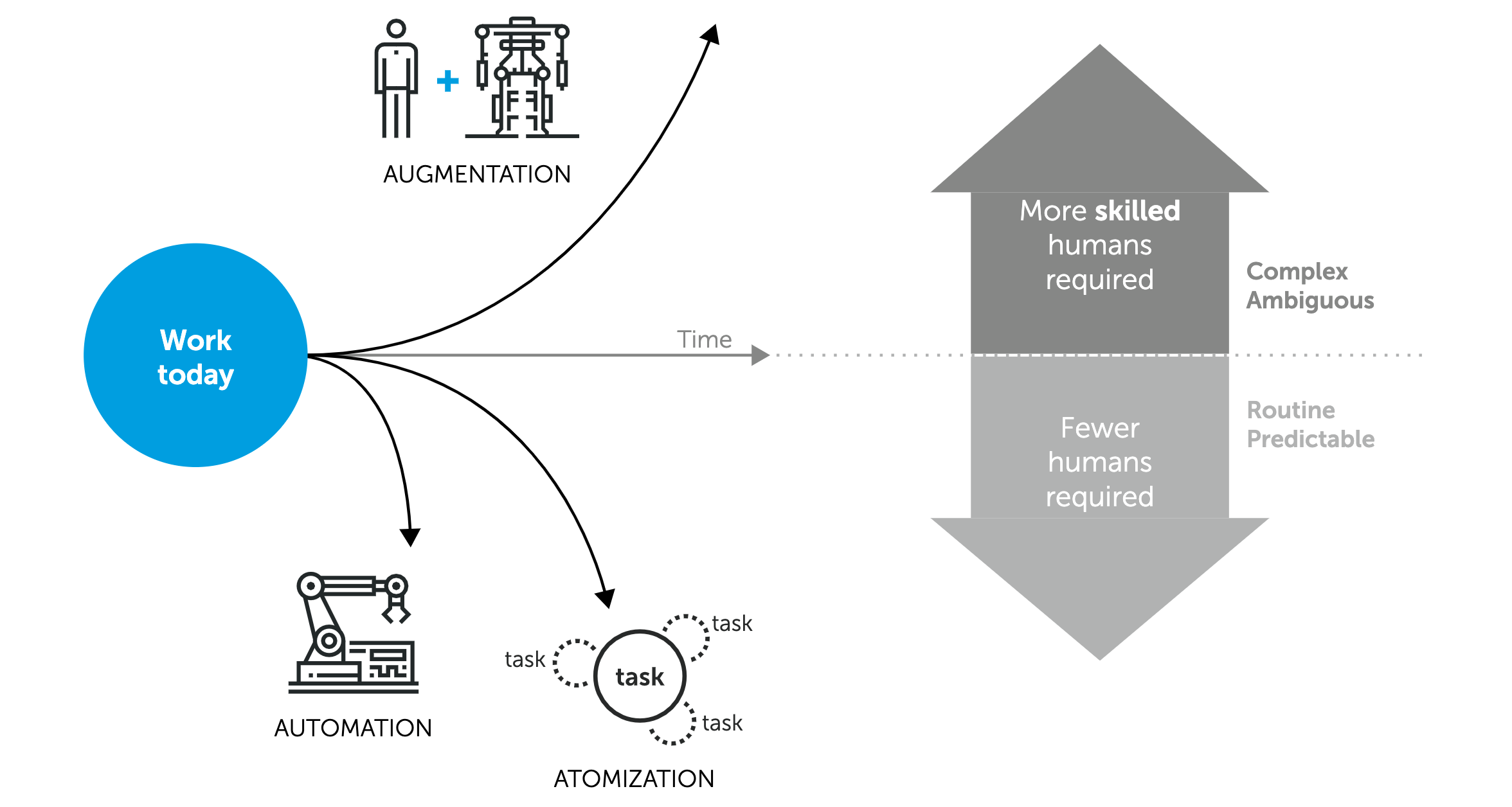
The Employee Revolution The pressure for transformation in our society is caused by two factors: longevity and the accelerated rate of change in our environment. These prevailing megatrends are illustrated in the figure below by McGowan & Shipley. Gone are the days when formal education was the only education anyone needed to succeed. Now and in the future, most learning will take place within organizations and the ecosystems surrounding them. McGowan claims that all of the successful enterprises today are in the learning business8, including e.g Apple, Amazon and Facebook. Lifelong learning is no longer an option, it is a necessity. The transformation illustrated in Figure 1 will hit many industries. The first industries that will be impacted are those that have predictable environments, like operating machinery or preparing fast food. Machines can work more efficiently than humans by collecting and processing data5. Software automation and even more sophisticated forms of AI-based implementations, like Intelligent Automation, will inevitably alter many administrative jobs in the public sector, banking and finance, advanced manufacturing and expertise-based services
In a recent interview Mr. Reijo Karhinen, CEO of OP Financial Group, expressed his vision of the future. Based on a lifetime of experience in the Finnish banking sector, he predicted that 1/4 of the jobs in banking will disappear in the next few years.9 McKinsey Global Institute estimates that between 400 million and 800 million individuals could be displaced by automation and need to find new jobs by 2030 around the world5.
Meet Your New Co-Workers Employees that retain their jobs will face a new world of working side-by-side with robots and AI. In addition to autonomous vehicles, self service point of sale systems, and fully automated manufacturing robots, we see AI sneaking into jobs that typically require human intelligence. Here are a few examples:
Artificial Intelligence
AI applications today are made to help humans think better10. AI solutions are able to perform tasks that normally require human intelligence, such as visual perception, speech recognition, decision-making, and translation between languages11.
Intelligent Automation
Intelligent automation is a combination of AI and automation. Intelligent automation systems sense and synthesize vast amounts of information and can automate entire processes or workflows, learning and adapting as they go3.
Process Automation Robots
Robotic Process Automation (RPA), the first stage of Intelligent Automation, is a way to automate repetitive and often rules-based processes. RPA robots undertake transaction processing just like their human counterparts and can work on multiple processes, across multiple functions (e.g finance cash postings in the morning, work on HR processes in the afternoon)12.
Personal Assistants
AI-powered personal assistants blend into other technologies, making it possible to easily search for information and automate routine tasks, such as calendar booking. Apple’s Siri, Microsoft’s Cortana and Google Assistant are already well known personal assistants.
Customer Service Bots
In customer service, chatbots are used to answer questions in a friendly and familiar chat interface. A chatbot can be trained to understand and answer predefined set of frequently asked questions. As a fallback if a bot can’t serve the customer’s request, the bot can forward the question to a real person.
Digital Learning Assistants
Chatbots can be very efficient in mimicking human interaction. This was proven by a Georgia Tech professor, who used chatbot to answer students’ questions throughout the semester13. A chatbot, also known as a digital learning assistant, can be used in corporate environments to help employees learn at their own pace, at any hour of the day, and also has the power to make the learning experience highly personalized.
Not all jobs can be automated. Jobs involved in managing people, applying expertise or creativity, and social interactions will remain in human hands5. The demand for talent and the right skills is high. Quite often “CEOs wish to find unicorns; the fully-formed employees with the precise skills that the organization needs not only today, but for whatever the future may bring”7. But as technology continues to change the environments in which we work, the definition of the ‘perfect employee’ will continue to change as well
The Most Wanted Skills
Soft skills are becoming more valuable for both the employee and the employer, as CEOs see the value in marrying technology with exclusively human capabilities7. The modern employees have good social and emotional skills, making them good communicators5.
The most in-demand skill set includes adaptability, problem-solving, logical reasoning, creativity and leadership7.
The most desirable employees should be the learners – those with curiosity and the ability to innovate.
“Cultivate the workforce’s creativity and digital dexterity. Humans’ contributions should focus on developing new ideas and revising workflows to exploit the latest technological advances.14Gartner, Future of Work Scenarios 2035: ‘I’d Rather Have a Bot Do It’ Van L. Baker, Tom Austin, 4 April 2018
The Two-Sided Challenge
In the chart above, McGowan illustrates how in the future more skilled employees are needed to complete complex tasks side-by-side with Artificial Intelligence solutions. On the other end, the work tasks that are routine and predictable can be replaced with automation and those jobs that can’t be automated are split into smaller tasks (atomisation) and given to those who are willing to complete a task at the lowest cost15.
Digital enterprises are facing a two-sided challenge: they are forced by competitors into automating their processes and yet they have to keep their reputation as a responsible and respected employer in order to attract and retain talent7. The conclusion in the IMF Working Paper was that “automation is good for growth and bad for equality”16. How can companies find the balance between remaining competitive through automation and being socially responsible? It seems that while society is using technology more than ever, companies must become more humane than ever. History has shown us that with new technologies come new jobs5. As new technologies emerge, new jobs are born. Dr. Ashkan Fardost reminds us that this industrial revolution, also known as industrial 4.0, is nothing alien; we’ve had machine takeovers in industries many times in the past. Emerging technologies have always led to an increase in the value chain that resulted in new demands in terms of skill and intellect in people.17 Companies will have to find the right combination of digital assets and human skills in order to realize the advantages of AI18. There’s a need for a whole new generation of technology specialists. But who’s going to train them?
Intelligent Automation experts are currently in very high demand, and the gap in the job market is expected to grow over the next ten years. Salaries for Data Scientists, Machine Learning experts and Intelligent Automation experts are already growing quickly. There is a fixed cost associated with hiring and firing, and this creates an economic reason for reskilling part of the workforce. The skills that companies require of their workforce are already changing. As the rate of change increases, companies will continue to struggle with identifying skill gaps and how job functions must subsequently evolve.6 Well-organized knowledge capture and management is crucial in the digital enterprise. How aware are you of the talent that exists within your company and what skill-sets will your company require over the next five to ten years? How can you map and predict the future of your company’s current talent pool and processes? Should you train your existing employees to master the skills, or hire a new generation?
A Sustainable Learning Strategy
The dream of finding unicorns, the fully-formed employees ready to take on any given work task, will always be there. But even the unicorn’s skills will become outdated. It is impossible to know what kind of new job roles we will have in a few years. Or as Gartner puts it: “Nearly 80% of business and IT executives expect skills and knowledge in 10 years to have little resemblance to those their organizations have today.”21 In order to stay competitive, corporations must act. This is where enterprise performance management and employee development merge together. According to the World Economic Forum’s report: “Once we know the knowledge and skills requirements of a job, we can assume that employees transitioning out of that job will be able to bring those capacities into any new roles”22. Even though job roles change, the skills should transformed to serve new positions. Existing employees always possess knowledge about the company and the work context, that has been built over time. This knowledge offers a solid foundation for successful retraining and development programs
. The Best Employees Are Made, Not Found
The solution in finding (and keeping) the right skills is to develop them from existing internal talent. In a recent paper about IT roles and talent profiles, Gartner recommends CEO’s to “Devise a strategic plan to take bold steps to source and develop talent.”21 The World Economic Forum emphasizes that it is crucial that businesses support their current workforces by training23.
Construct a Learning Strategy
Building a corporate academy and a successful learning strategy starts with understanding the business goals, and the skills needed to achieve them. A strong learning and training strategy will make sure that employees’ skills are kept up to date, while jobs continue to evolve with technology.
What new skills are needed?
What new job roles need to be created?
What old job roles are no longer necessary?
When new skills are achieved, how could they be applied to future job roles?
The next step is to map the existing skills and knowledge in the company. Once the skills are recorded, the skill gaps can be found and personal learning goals set. Knowing your employees’ skills throughout the process will help you decide which new skills can be trained, and which skills need to be acquired by hiring. McKinsey Global Institute reports that a traditional approach to training and retraining often stresses theory too much, when in fact practical skills should be the focus6. In building the learning strategy, it is important to keep in mind how the learning should actually happen. Should learning be social, digital, practical, formal or informal? Should you offer theory or practical challenges? According to the 70:20:10 learning model it should be all of this, but in the right proportion24. Learning should be up to 90% informal, learning by doing or learning from co-workers.
If a corporate academy built correctly, learning is integrated in the flow of day to day work. Using a sophisticated digital learning solution makes learning new skills more relevant to actual work tasks, and the learning materials are available when they are needed the most, to support the work assignments. Once constructed, the new learning strategy should be piloted to test these new practices and enable the use of predictive models. Predictive analytics will make it possible to create high quality learning material, as they help in predicting what will happen and recognize the bottlenecks in the processes and areas to improve the content.
Invest in Learning Content
A great learning strategy and a solid technological learning solution are useless without carefully produced learning material. Different types of topics and objectives require different kinds of materials. The right kind of content is optimized for the purpose, personalized for the individual needs, and serves the company objectives. The learning solution in use should bend to meet the requirements of the content and strategy. When designing learning content, we should ask ourselves these four questions:
What needs to be learned?
Who needs to learn it?
How should the learning materials be constructed and delivered?
How do we measure the impact of learning on our business?
When the learning objectives are clear, it becomes very easy to not only monitor and review learning activities and behaviours, but also to link learning activities to business outcomes. Once learning materials are produced, they need to be constantly reviewed. Adjusting the materials with the help of learning analytics makes it possible to increase the production value of the learning program, leading to higher retention and shorter time to competence.
Choose the Right Tools
The learning development market offers a variety of different learning solutions. Out-of-the-box-solutions promise fast success, and highly customizable learning experience platforms (LXP) promise precise results. A corporate academy can be built on both. However, according to Deloitte, the latter offers more tools in personalizing, curating, searching and analyzing the content28. A modern corporate academy harnesses the powers of Artificial Intelligence and Intelligent Automation, and molds these technologies into a system that seamlessly supports the development of the workforce. With a learning experience platform also comes integration capabilities, enabling access to multiple technologies via a single touchpoint28
Conclusions Get started with an economical learning strategy. Businesses need to be aware of the possibilities that learning can bring to them. Optimal investments in L&D can create massive savings, especially when the alternative is hiring and firing. Know what your employees are capable of. What skills and knowledge do you have in your organization? When you have a better idea of what skills your employees collectively possess, it is much easier to identify areas for improvement and provide training accordingly. A good training program is an investment in the future – better customer experience and scalability. Digital training is scalable and when done well, the same materials can be used to train thousands of people. Analytics help you in making better decisions with predictable outcomes. By tracking all of the learning data available to you, and leveraging predictive analytics, you can begin to understand how the learning impacts business and predict the future training needs. Not only have AI and intelligent automation become part of the daily work tasks for many, but they are also used to support corporate learning. It is crucial to find the right tools to measure the learning impact and offer the learning in a timely and personalized fashion. Investing in a learning platform that supports intelligent technologies will help you in creating the most efficient learning program for your employees.
5 – Manyika,James; Lund, Susan; Chui, Michael; Bughin, Jacques; Woetzel, Jonathan; Batra, Parul; Ko, Ryan; Sanghvi, Saurabh. Jobs lost, jobs gained: What the future of work will mean for jobs, skills, and wages. McKinsley Global Institute. http://bit.ly/mck-future-of-jobs
6 – Illanes, Pablo; Lund, Susan; Mourshed, Mona; Rutherford, Scott; Tyreman, Magnus. Retraining and reskilling workers in the age of automation. McKinsey Global Institute. https://mck.co/2BBJNgm
9 Helsingin Sanomat. OP-ryhmästä häviää tuhansia työtehtäviä jo lähivuosina, varoittaa eläkkeelle jäävä pääjohtaja Reijo Karhinen HS:n haastattelussa. http://bit.ly/hs-op
13 McFarland, Matt. What happened when a professor built a chatbot to be his teaching assistant. The Washington Post. http://bit.ly/wapo-teaching-assistant
14 Gartner: Future of Work Scenarios 2035: ‘I’d Rather Have a Bot Do It’. https://gtnr.it/2OSt622
15 McGowan, Heather; Shipley, Chris. Debate Prep: When Trump Says “Jobs” Think Algorithms, Not Immigrants. Medium. http://bit.ly/-medium-heather-mcgowan
16 Berg, Andrew; Buffie, Edward F; Zanna, Luis-Felipe. Should We Fear the Robot Revolution? (The Correct Answer is Yes). International Monetary Fund. http://bit.ly/imf-robot-revolution
18 Bughin, Jacques; Hazan, Eric; Ramaswamy, Sree; Chui, Michael; Allas, Tera; Dahlström, Peter; Henke, Nicolaus; Trench, Monica. How artificial intelligence can deliver real value to companies. McKinsey Global Institute. https://mck.co/2BveKTB
In the era of “always-on” transformation. Across virtually all industries, unprecedented disruption and market turbulence—due to globalization, technological innovation, changing regulations, and other factors—are challenging established business models and practices, and requiring organizations to launch more frequent transformations in response.
To keep up, companies need to undertake many different types of transformation. Any one of these, or several, can be under way at a company at any given time.
Business transformations are typically built around new structural elements, including policies, processes, facilities, and technology. Some companies also focus on behaviors — defining new practices, training new skills, or asking employees for new deliverables.
Research shows that 85 percent of companies that have undertaken transformations over the past decade have pursued more than one type, with the most common being organizational, operational, and rapid financial improvements.
Defining transformation as a profound change in a company’s strategy, business model, organization, culture, people, or processes—either enterprise-wide or within a specific business unit, function, or market. A transformation is not an incremental shift in some aspect of the business but a fundamental change aimed at achieving a sustainable, quantum improvement in performance and, ultimately, shareholder value. Unlike continuous improvement—which focuses on small-scale changes that start with employees and percolate up through the organization—always-on transformation requires a series of much larger, interdependent initiatives that are driven by top management.
In this new era, the ability to implement transformation has become a competitive differentiator. Yet most companies are not reaping rewards from transformation efforts. According to analyses only 24 percent of companies that complete transformations outperform competitors in their industries in both the short and long term.
What most organizations typically overlook is the internal shift — what people think and feel — which has to occur in order to bring the strategy to life. This is where resistance tends to arise — cognitively in the form of fixed beliefs, deeply held assumptions and blind spots; and emotionally, in the form of the fear and insecurity that change engenders. All of this rolls up into our mindset, which reflects how we see the world, what we believe and how that makes us feel. The result is that transforming a business also depends on transforming individuals — beginning with the most senior leaders and influences.
Why do most companies fail to meet their transformation goals? There are several reasons:
The first is that companies typically adopt a short-term, top-down approach to implementation. Transformations are energy intensive and are often executed under tremendous pressure from boards and other stakeholders—frequently as a reaction to flagging performance—which leads management teams to seek fast fixes and immediate results. Consequently, many companies simply seek to compel employees to change their behaviors. They motivate through carrots and sticks—mostly sticks—rather than tapping into the intrinsic motivators that can spur employees to improve performance in a sustainable manner. Among many potential explanations, one that gets very little attention may be the most fundamental: the invisible fears and insecurities that keep us locked into behaviors even when we know rationally that they don’t serve us well. Add to that the anxiety that nearly all human beings experience in the face of change. Nonetheless, most organizations pay far more attention to strategy and execution than they do to what their people are feeling and thinking when they’re asked to embrace a transformation. Resistance, especially when it is passive, invisible, and unconscious, can derail even the best strategy.
Second, successful transformations increasingly require changes to business and operating models, which in turn require new ways of thinking and working. Yet more often than not, companies fail to build the capabilities required to enable people to work in new and different ways. Without adequate attention to enabling new behaviors and ways of working, companies do not achieve and sustain the results they desire.
A third reason underlying the failure to reach transformation goals is that many companies approach transformation in a one-off manner—treating each initiative as an independent event. Under this flawed thinking, they essentially put up scaffolding around one aspect of the organization, focus intently on changing some part of it, and then take down the scaffolding, thinking that they can revert to steady-state operations.This kind of short-term, one-off approach is akin to the way some schools prepare students for standardized tests. In an attempt to improve test scores, teachers try to cram knowledge into students’ heads—basically “teaching to the test” for a few frenzied weeks leading up to the tests. That approach can work—scores often do go up to meet the short-term objective of doing well on the tests—but it doesn’t meet the fundamental goals of education: making sure students learn the underlying skills that will help them succeed over the long term.
Companies should not just surviving but thriving in the era of always-on transformation.
Most transformations focus on financial or operational goals (for example, increasing revenue or improving operating efficiency). While such goals are extremely important—and motivating to the board, investors, and senior management—they tend to be an underwhelming motivator for the majority of employees. In order to get employees to buy into a transformation, its goals must be tied to the deeper and more inspiring purpose of the company (which transcends any given transformation).
As a coach I help companies embrace a more purpose-driven culture.
I found that when organizations can clearly define and communicate their purpose to employees—that is, the “why”—these employees feel that they are part of something bigger. And when employees believe in the company’s purpose, they are intrinsically motivated to go above and beyond. Once a company has formulated and articulated its clear overarching purpose, all subsequent transformations should link directly to it. Moreover, all employees should be able to see how their contributions help the company succeed in those transformations—and better fulfill the company’s broader purpose. All three elements are crucial: a well-defined and shared purpose for the company, a specific link to the transformation at hand, and a clear connection between employees’ actions and contributions to the company’s objectives.
In an environment of always-on transformation, companies need to treat transformation as if it were a triathlon, not a sprint. Transformations are typically intense efforts that require employees to go beyond their normal baseline workload. An all-out sprint may work for the first few months, but eventually fatigue will set in and employees will be less able to contribute—particularly when another transformation is likely right around the corner. A better way is to think like triathletes, who have to swim, bike, and run. Triathletes learn to pace themselves so that they can excel in all three disciplines. Rather than asking employees to maintain a high level of engagement nonstop, companies need to intersperse commitments to high-demand transformation projects with time for true recovery. With the right pacing, employees will be able to engage enthusiastically on each new assignment asked of them, without losing energy. (Notably, there is one group that simply cannot take a break: the senior leadership team.)
Companies are increasingly embarking on transformations that rewire the way they operate—including new business models, digitization, and fundamental changes to the roles of business units and functions. As a result, companies invariably need to build new capabilities, such as processes, knowledge, skills, tools, and behaviors. Knowing how to identify and develop these capabilities in any given transformation is pivotal to success.
In a business landscape characterized by constant and broad-ranging disruption, the ability to rapidly change course in response to market shifts and to enable employees to adapt the way they work becomes critical. Truly agile organizations don’t just accommodate change and mandate speed—they ingrain these elements into the company’s culture and ways of working. Agile companies are not burdened by excessive layers of management or bureaucracy. Employees have a wide degree of autonomy and are trusted to resolve many of the issues they face without direct oversight. They are able to take on new roles and responsibilities and to swiftly adapt to new ways of working. They are quick to acquire knowledge of new topics, with the understanding that another change is almost certainly coming soon. In addition, agile companies encourage experimentation, and they don’t fear uncertainty. Managers at these companies celebrate and reward risk taking, and they don’t punish failure (only the failure to experiment).
Companies that wish to lay the groundwork for future transformations need to foster a learning mind-set across the entire organization. Such an organizational mind-set entails spurring people to seek out new knowledge, experiment with it, share it, and ultimately use it to improve the company’s performance. For that reason, employees at organizations with a learning mind-set are encouraged to follow their curiosity and challenge conventional thinking. They develop creative ways to improve processes and find better ways to do things. This kind of learning culture requires a free exchange of ideas, an acknowledgment that many new ideas will fail, and an understanding that such failures are an inevitable part of progress.
Transformations can be ideal environments in which to promote learning because they demand creative problem solving and new ideas.
As mentioned earlier, one of the key challenges in transformation is that companies tend to see each initiative as a temporary, one-off event. As a result, companies consider change management as part of the temporary scaffolding of a given transformation effort. Instead, companies need to build change-management skills, make tools available across the broader organization, and consider change management to be a core competency among the extended leadership team.
All of the above imperatives have enormous implications for a company’s people practices and HR policies.
HR must play a larger role in this always-on transformation era.
Ultimately, HR needs to participate actively in senior leadership discussions, help develop the company’s strategy and transformation agenda, and support the alignment of specific functions with the company’s priorities. To embrace this role, HR needs to evolve beyond its traditional supporting function to become a true strategic transformation partner. And, equally important, the company’s senior leadership needs to support HR’s expanded role. Specifically, HR must understand the requirements of the transformation and how they impact the company’s employee-related processes and HR disciplines. It must work with company leaders to understand how employees and the organization will enable the company’s strategy. It must anticipate the implications of every change initiative on employees and the organization. It must know whether the company has the capability and the capacity to meet its strategic goals. All the while, HR must keep pace with the organization and operate with agility as transformations unfold.
One to one performance coaching is increasingly being recognised as the way for organisations and individuals to improve performance. By improving the performance of the most influential people within the organisation, the theory goes that business results should improve.
Executive coaching is often delivered by coaches operating from outside the organisation whose services are requested for an agreed duration or number of coaching sessions. Adding to the process: transformational leadership, that is both directive and inclusive clearly raises the bar for executives. It requires an investment in time, energy, and management focus when demands on leaders are, typically, already very high. The bandwidth required to lead in this way is often one of the biggest constraints in a transformation. However, in my experience, making the needed investment of time, energy, and management focus pays off through more efficient and effective execution and more sustainable results.








 Renato Moreira